The Second Storm

At 5:20 this morning, two raccoons began fighting beneath my open bedroom window.

I had planned to sleep in.

The night before, I had stayed up later than usual, comforted by the thought that morning would allow me to remain curled beneath the warm blankets for a little longer. There were no alarms demanding an early start and no reason to exchange the warmth of the bed for the cool air coming through the window.

At least, that had been the plan.

The night had already awakened me once.

All day yesterday, we had been expecting a storm. The forecast included wind, rain and the possibility of hail, so earlier in the day I moved all our vehicles beneath cover.

The storm waited until approximately 1:30 in the morning to make its entrance.

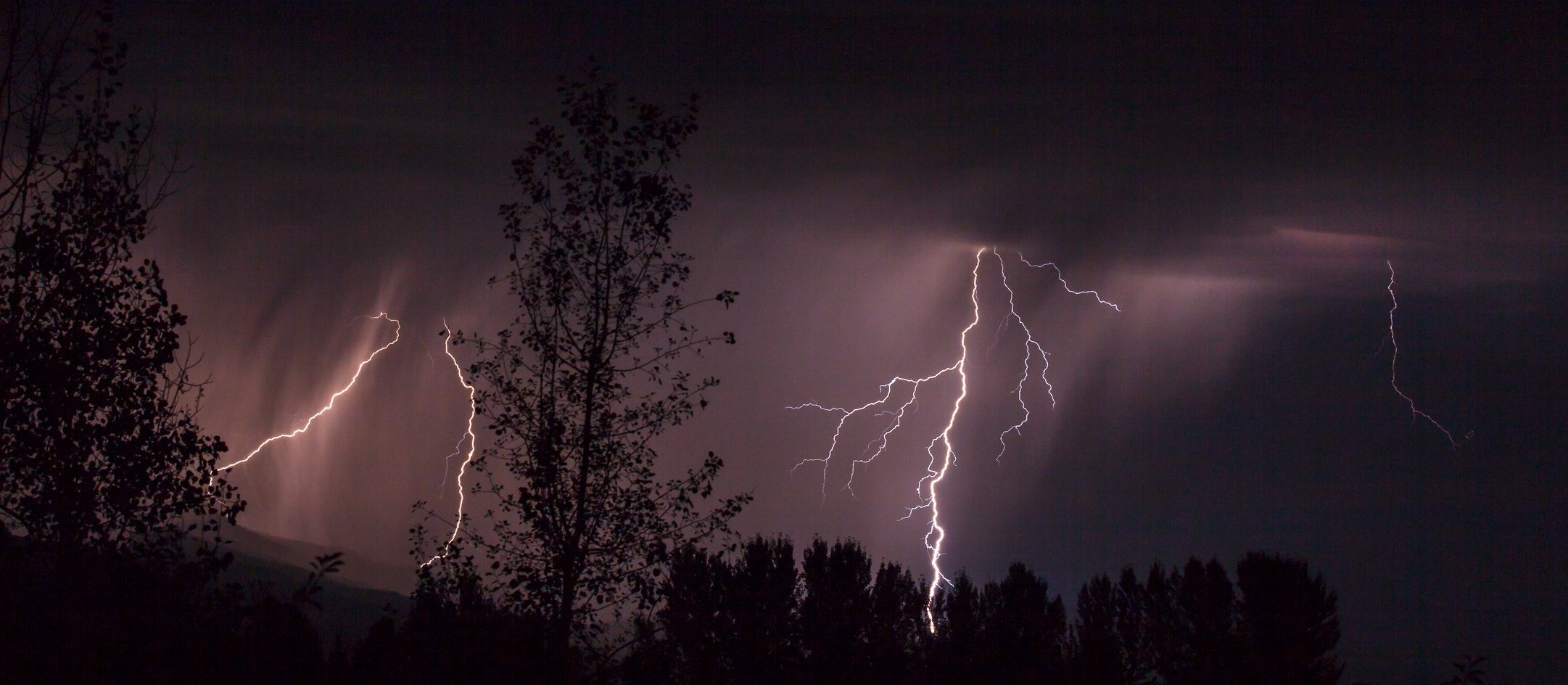
Lightning did not seem to come from any single direction. It flashed from every corner of the sky, with each second appearing to belong to another burst of light. Thunder followed. The wind moved through the trees and pressed against the house.

It was quite a spectacle.

Yet the storm brought no rain and none of the expected hail. It filled the sky with light and the night with noise, then passed without damaging anything.

Eventually, the lightning moved farther away, the thunder softened and I returned to sleep.

Then came 5:20.

The sound beneath my window was not thunder. It was hissing, snarling and the unmistakable disturbance of gravel. Two raccoons had chosen the landing at the end of our driveway as the site of what appeared to be an important territorial disagreement.

There is plenty of room around our place.

Of all the available Montana, both raccoons apparently wanted the same few square feet.

I lay there listening and wondering why either one cared so much about that particular patch of gravel. One could have moved several yards in any direction and found more unoccupied space than it could possibly use. Territorial jostling seemed unnecessary when there was so little territory worth defending and so much territory available.

I understand that raccoons are simply raccoons. They do not attend conflict-resolution seminars, submit themselves to pastoral counseling or pause to consider whether a disagreement is worth disturbing someone’s sleep.

Still, as I listened to them fight, my thoughts returned to the message I had preached the previous morning.

Judges 11 tells the story of Jephthah, a rejected man who became a mighty warrior. When the Ammonites threatened Israel, the people who had once driven him away invited him home because they needed someone who knew how to fight.

Jephthah defeated the enemy beyond Israel’s borders, but he carried another enemy home. His wounds, his need to secure what had once been denied to him and his mistaken belief that God’s favor could be negotiated through a bargain all followed him through his own front door.

His daughter paid the cost.

That was the warning of the message: we can win the battle everyone sees while losing the one that matters most. The enemy outside us may be defeated while the fear, grievance or false belief within us remains fully armed.

The raccoons made me think even more about the message our church will hear six mornings from now.

Judges 12 begins immediately after Israel’s victory over Ammon. The external threat has passed, but peace does not follow. The men of Ephraim arrive with a grievance. They accuse Jephthah of failing to include them in the battle and threaten to burn his house down over him.

The complaint was not entirely new. Earlier in Judges, Ephraim brought a similar grievance to Gideon. Gideon answered carefully, honored them and allowed their anger to subside.

Jephthah was not Gideon.

He responded with accusation and force. Words became weapons, resentment became warfare and Israelites began killing other Israelites. By the end of the conflict, forty-two thousand men of Ephraim were dead.

The same kind of complaint produced two very different endings.

The difference was not merely what was said. The difference was what those words encountered inside the person who heard them.

A humble answer found a way toward peace.

An old wound found another war.

With a little encouragement from Selena’s flashlight, the raccoons disappeared into the darkness and the gravel beneath my window grew quiet. But I remained awake, thinking about the two storms that had interrupted the night.

The first came from the sky. It announced itself in the forecast and illuminated the horizon when it arrived. We could not prevent the lightning or silence the thunder.

The second began much closer to the ground.

We are generally better at recognizing dangers on the horizon than the pressure gathering within us. Those storms seldom appear on radar.

They gather around an insult we keep rehearsing, a place we believe must be defended, an old rejection we have never surrendered or a fear that convinces us another person’s presence threatens our own. They may begin quietly, but once released, other people are forced to live beneath them.

Not every conflict is caused by a lack of room.

Sometimes there is plenty of room, but something within us has decided there cannot be room for both of us.

Peace requires more than the absence of opposition. It requires the humility to believe that another person does not have to lose for us to have a place. It asks us to surrender the need to make new people pay old debts and to let God heal the wounds that otherwise turn every disagreement into another battlefield.

At 5:20 this morning, I found myself asking a harder question:

Have I given the people nearest to me any reason to brace themselves for storms I have refused to surrender?

The world will send enough weather across their lives.

By the grace of God, I do not need to add my own.

Until next time,

George


If this reflection brought someone to mind, perhaps share it with them. If you enjoyed it, I hope you’ll stay awhile, read a few more and consider subscribing.

The Boyz in the Boat

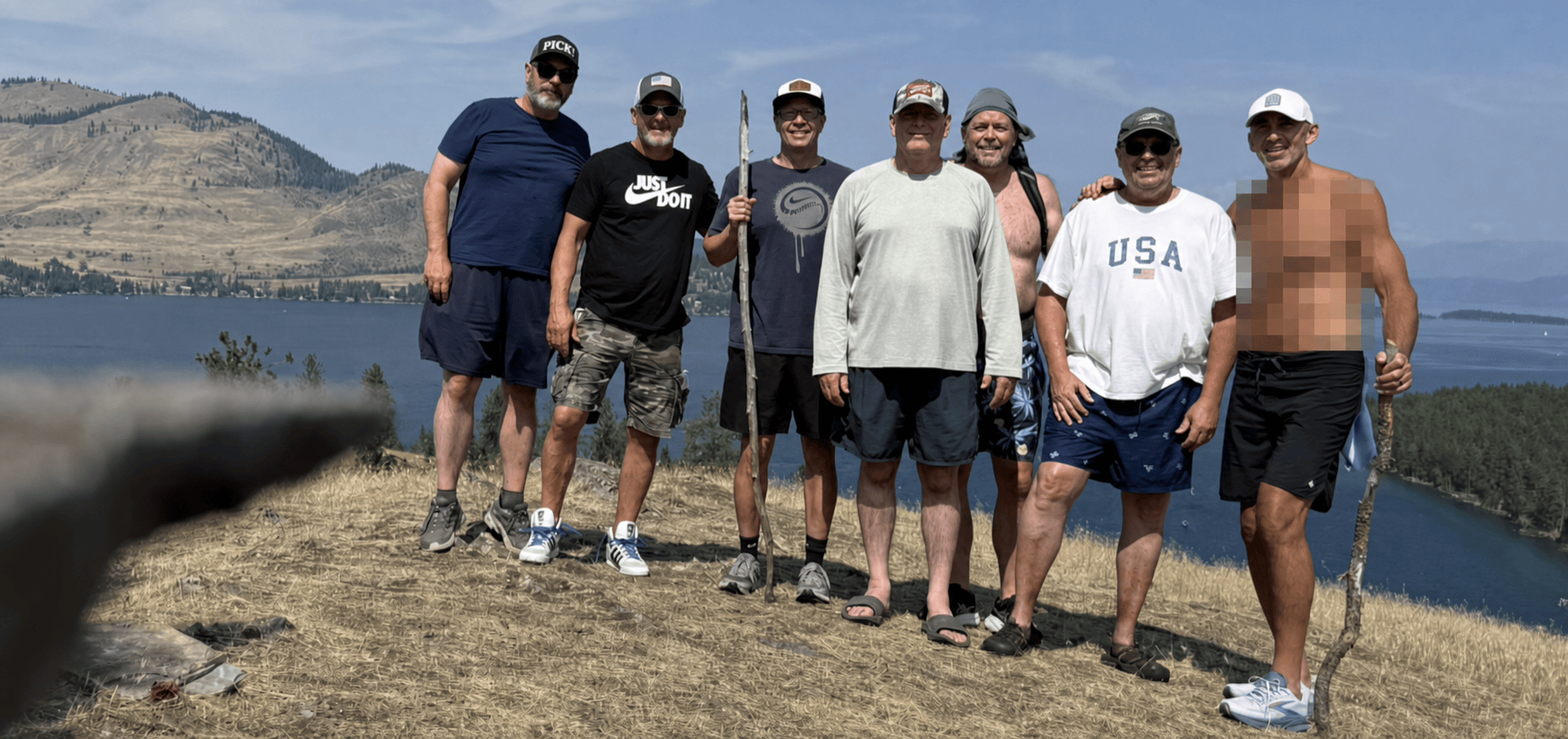
The Boyz above Flathead Lake after climbing Wild Horse Island

A special group of men has been part of my life since we were barely old enough to call ourselves men.

We met during our freshman year of college. We had little money, limited wisdom and no idea where our lives would eventually take us. We knew one another before careers, marriages, children, grandchildren and all the other responsibilities that gradually attach themselves to a person’s name.

The year was 1985.

Nearly everything around us has changed since then, but the bond we share today is no less real than it was when we first became friends. Time has added years to our faces and history to our conversations, but it has not taken away the ease of being together.

There is something rare about spending time with people who knew you before you became whoever the rest of the world believes you to be.

We recently converged on Polson, Montana, for a retreat with the Boyz. We rented a large house on the southern shore of Flathead Lake. The accommodations were more than adequate, but the real attraction was beyond the windows. The yard ended at the water, where a dock waited for the pontoon boat we had rented.

At least, that had been the plan.

The first afternoon brought wind—the kind that makes the surface of a lake look angry. Waves of three and four feet rolled across the water, removing any temptation to pretend enthusiasm was the same thing as sound judgment. The rental boat remained safely tied to the marina dock, and our dock at the house remained empty.

The following morning, the wind was joined by an all-day rain. It was not the passing kind that briefly darkens the sky and then moves along. It settled over the lake, soaked the lawn and kept us inside.

So we talked.

Cards were shuffled, dealt, gathered and shuffled again. Old stories surfaced and were corrected by the other eyewitnesses. Events that one person remembered with absolute confidence were amended by six people who remembered them differently. We caught up on the parts of life that do not fit easily into occasional telephone calls or group messages. We laughed at things that would have required far too much explanation for anyone else to understand.

The weather had kept us from doing what we planned, but it had not kept us from what we had come to do.

We had come to be together.

The next morning arrived with no rain, a light breeze and noticeably improved dispositions. We drove the five minutes to the marina and boarded the pontoon.

Before we left, the attendant showed us a map of the lake and pointed out areas where shallow water, rocks and submerged obstructions required particular attention. Repairs resulting from shallow water that has not been properly respected can add up quickly.

Unfortunately, I have some experience with that equation.

The lake was still unsettled enough that we decided against immediately crossing its open water. Instead, we turned into the Flathead River and headed downstream toward the Séliš Ksanka Ql̓ispé Dam, formerly known as Kerr Dam, roughly four or five miles away.

Several hundred yards into the river, nearly everyone decided to jump overboard for a swim.

Everyone except me.

I do not particularly enjoy getting wet, and with other boats moving along the river, someone needed to remain aboard and maintain control of the vessel. I was willing to make that sacrifice.

Once everyone had climbed back aboard, we continued toward the dam. We were not in a hurry. Familiar music from our college years played through the speakers, and the conversation moved easily between the present and a time when those songs had been new.

Before long, we reached the first shallow area the attendant had marked on the map. The channel narrowed, and the color and texture of the water began to change. Whatever waited beneath the surface could not always be seen clearly from the helm.

Without being asked, the Boyz moved into position.

Several stood along the port side while others watched from starboard. They leaned over the rails, studied the water and called out what they saw. One warned me away from a shallow patch. Another identified the deeper channel. Someone else watched behind us to make certain the stern and motor cleared what we had already passed.

I remained at the controls, but I was not navigating alone.

We made it through without touching anything expensive and continued toward the dam. Once we arrived, we stayed for a while with no particular agenda. We floated, listened to music, looked at the surrounding hills and enjoyed having nowhere else we needed to be.

Later, we began searching for a rope swing we had been told was somewhere along the river. After a little looking—and more assistance from the men stationed along both sides of the boat—we found it.

A couple of our crew members decided to try it. Unfortunately, the length of the rope had not been calculated with their equally long frames in mind. Their feet entered the water well before the swing reached the point at which they might have risen gracefully into the air, stealing most of their momentum and nearly all the elegance from the attempt.

They plowed into the river rather than soaring above it.

The rest of us offered the “encouragement” close friends are uniquely qualified to provide.

We eventually pulled onto shore for lunch, and the men along the rails once again watched the depth and guided the boat safely in and out. By then, the arrangement had become almost instinctive. Whenever the water became uncertain, everyone found a place from which he could see and offered what he knew.

After lunch, we decided to make the longer journey to Wild Horse Island.

The ride gave us time to appreciate the scale of Flathead Lake and the mountains rising around it. When we reached the island, we began searching for a place to go ashore. The first landing appeared inviting from a distance, but as we approached, submerged pylons and deadfall began appearing beneath the surface.

It looked like a minefield.

There may have been a safe route through it, but finding that route would have required risking the boat to prove it existed. We turned around.

That decision did not diminish the day. It simply preserved our ability to continue it.

We followed the island’s shoreline until we found a designated landing site and a trail climbing toward higher ground. We had come prepared for a day on the water, not a hike. None of us had brought water, and Rod’s only footwear was a pair of rubber slides better suited to crossing a pontoon deck than climbing Wild Horse Island. It was not an impressive display of preparation, but the opportunity to climb together again was too difficult to resist.

So we began climbing.

The trail rose away from the lake through dry grass and scattered ponderosa pines. As we gained elevation, the water widened beneath us and the mountains appeared beyond it. The climb awakened memories of the times several of us had hiked and hunted together years before, when steep trails had required considerably less discussion.

Eventually, we stood together above the lake, no longer the young men who had first become friends but still recognizably the same group. The photograph from the summit shows seven men standing side by side, some holding walking sticks acquired along the way. It records where we were that afternoon.

Looking at it later, however, I realized that the image that best explains our friendship was never photographed.

It happened earlier, when the channel narrowed and six men moved toward the rails.

From the helm, I could see ahead, but not everything. The boat itself obscured hazards close to the hull, and glare concealed what waited beneath the surface. The Boyz could see the water from angles I could not, so they leaned over the sides and called out what they saw.

A little to port.

Stay right.

There is something beneath us.

The channel is clear ahead.

The wheel and the clearest view were not always in the same place.

There is something important in that distinction. Being responsible for a decision does not mean we possess all the wisdom needed to make it. The best friends understand this. They do not grab the wheel or demand control. They move to where they can see, tell us the truth about what is there and trust us to steer.

For most of my life, I thought enduring friendship was built primarily by looking back—remembering old stories, familiar songs and younger versions of ourselves. Those things matter. But perhaps friendship endures because it also looks ahead.

The summit photograph is the picture we will keep.

The image I will remember is six friends leaning over the rails.

They were not looking at me.

They were looking where I could not.

Come to think of it, we have been doing that for one another since 1985.

Until next time,

George


If this reflection brought someone to mind, perhaps share it with them. If you enjoyed it, I hope you’ll stay awhile, read a few more and consider subscribing.

The Things We Say To Rocks

Yesterday I found myself talking to rocks.

They did not answer, which was probably best. They had already made their position clear.

My friends Terry and Nancy joined me for a trip into the Beartooth Mountains. We drove through Red Lodge and began climbing the Beartooth Highway, a road that seems determined to demonstrate just how quickly the ordinary world can fall away.

They had never been over Beartooth Pass before.

The highway rose through a series of sweeping switchbacks, each turn revealing more of the country below us. Red Lodge grew smaller. The tree line thinned. Mountain lakes appeared in bowls of stone, and patches of snow remained tucked against the slopes even in summer.

Near the summit, at nearly eleven thousand feet, the landscape became broad and spare. Rock, sky and distance seemed to be the only things left.

Terry and Nancy were in awe.

I understood why. The Beartooth does not simply give you something beautiful to look at. It alters your sense of scale. The mountains make our concerns seem smaller without making them unimportant.

Eventually, we turned onto the Morrison Jeep Trail.

The pavement disappeared, and the mountain began asking different questions.

The trail narrowed. Rocks appeared in the road, then larger rocks, then collections of rocks that seemed to have gathered specifically to discuss whether the Bronco should be allowed to pass.

The Bronco performed beautifully. Its G.O.A.T. modes adjusted the vehicle to the terrain, but no setting could choose the line for me. That still required judgment.

At the more difficult places, Terry would get out and walk ahead. From outside the vehicle, he could see what I could not: the position of the tires, the height of an obstacle and the distance between a rock and the fender.

I would ease forward while watching him and listening to his directions.

At one point, we came to a steep descent. I was confident the Bronco could make it down. I was far less confident it could make it back up.

That difference settled the question.

Because we had Sadie and Chewy (Terry and Nancy’s dog) with us, I did not have all of my recovery gear with me. A blowout or mechanical failure could leave the three of us stranded without reliable cell service and roughly forty miles of mountain road from dependable help. This was also grizzly country, which made the prospect of an unplanned night in the wilderness considerably less appealing.

None of that meant something would go wrong. It changed what going wrong could cost.

So we turned around.

There are places where courage means proceeding. There are others where wisdom means refusing to let confidence make a promise preparation cannot keep.

Later, while easing past another obstacle with my head out the window, I heard myself addressing it directly.

“You’re a very bad rock. You’re bad, bad, bad. Stay away from my fenders.”

It was ridiculous.

It also helped.

We often speak directly to the adversaries in our lives. Perhaps we are trying to keep them at bay. Perhaps we need to hear ourselves say that they are not as large as they first appeared.

Naming an obstacle changes our relationship with it. What had been an undefined threat becomes something specific—something that can be examined, approached and perhaps crossed.

My voice was not the only one I needed that day. Mine supplied courage; Terry’s supplied perspective.

I needed both.

Some difficulties require us to answer the fear within us. Others require us to listen to someone standing where we cannot. Often, the same difficulty requires both.

Terry did not move the rocks. He simply helped me see the next wheel placement.

Perhaps faith works much the same way.

Faith does not deny the obstruction, confuse confidence with preparation or mistake uninterrupted forward motion for courage. It looks honestly at the terrain, listens to voices beyond its own and chooses the next wise movement.

Sometimes that movement is forward. Sometimes it leads back the way we came.

Faithfulness is not measured by direction. It is found in the willingness to trust wisdom, wherever it points.

That day, wisdom pointed forward more than once.

Once, it pointed home.

Until next time,

George

If this reflection brought someone to mind, perhaps share it with them. If you enjoyed it, I hope you’ll stay awhile, read a few more and consider subscribing.

The Miles Ahead

I am sitting at Les Schwab replacing tires that have not yet failed.

There are still many miles left in them. The question is whether they are the right miles for what lies ahead.

Soon I will begin a twelve-week grape-hauling season. Long days, heavy loads and changing road conditions will ask more of these tires than an ordinary trip across town. So I am replacing them early—not because they cannot carry me through today, but because I am responsible for where they must carry me tomorrow.

If I judged the tires only by today’s demands, replacing them might seem unnecessary. They brought me to the shop. They could probably take me home again. Nothing about them demands immediate attention.

The coming season does.

We tend to think of maintenance as repairing something that has broken. A warning light appears, a belt begins to squeal or a tire goes flat, and we respond. By then, however, maintenance has given way to an emergency.

Proper maintenance usually happens earlier and receives very little attention. No one sees the breakdown that never occurred. No one knows about the dangerous moment that was avoided or the delivery that arrived on time because someone acted before action became urgent.

Neglect is equally quiet.

It rarely announces itself with a catastrophe. More often, it whispers, “You can get a little more out of this.”

And sometimes we can.

One more trip. One more week. One more season.

Each time nothing goes wrong, postponement begins to feel like wisdom. We congratulate ourselves for extracting a little more value from something, never considering that we may be spending the margin we will need later.

Tires that perform adequately on a warm afternoon may tell a different story on a wet highway under a heavy load. The weakness was already present. The difficult conditions merely revealed it.

Life works that way too.

We often measure our condition by whether we are still functioning. We are getting the work done, meeting our obligations and making it home at the end of the day. Because nothing has failed, we assume everything is ready.

But being functional today is not the same as being prepared for tomorrow.

We should not wait until parts of our lives are completely worn out before caring for them. Our strength, our health, our relationships and our spiritual lives all require attention before something breaks.

Not everything needs to be replaced, of course. Some things need rest. Some need adjustment. Some need repair. Others simply need us to notice that the demands ahead will be greater than those behind us.

Maintenance is the discipline of paying attention before something has to cry out.

It is also an act of stewardship.

Stewardship is not squeezing the final mile out of everything we have been given. It is caring for what has been entrusted to us so that it remains dependable when it matters most. The consequences of neglect, however, rarely belong to us alone.

The grapes these tires will help me retrieve belong to us, and our winery depends upon their safe arrival. We have too much invested in the harvest to be careless about how it gets home.

But the road home does not belong to me. I will share it with people who know nothing about my grapes, our winery or the twelve-week season ahead. They should not have to bear the consequences of maintenance I chose to postpone.

Preparing well is one way I can honor both—the harvest I am bringing home and the people traveling beside me.

Soon the work at the tire shop will be finished, and I will drive away on new tires. Nothing dramatic will happen. There will be no evidence that replacing them early prevented anything at all.

That is all right. The best results of proper maintenance are often the things that never happen.

Today I am preparing for miles I have not yet traveled and responsibilities that have not yet arrived. Some things deserve our attention not because they have failed, but because they matter too much to wait until they do.

Until next time,

George

If this reflection brought someone to mind, perhaps share it with them.

Sounds Of Woodbine

The sun had not yet cleared the mountains when I sat outside our camper at Woodbine Campground and asked myself a simple question:

What do I hear?

First, water.

Not water I can see, but the distant roar of water bullied by gravity—cascading over boulders and ricocheting around bends laced with deadfall.

The sound never stops to catch its breath.

It is constant. Powerful. Soothing.

Then wind.

Driven by morning thermals, it moves through the trees, announcing the approach of the sun rising in the east. Leaves lift, brush against one another and settle before lifting again.

Above me, a little chipmunk clings to a branch no bigger around than one of his tiny fingers. He is eating the tender meat from the developing winged seeds of a Rocky Mountain maple.

What strikes me is that he chirps even while he eats.

I watch the effortless coordination of muscles and perfectly designed joints. They engage and release at precisely the right moments, balancing his body as he stretches for the next course while dropping what remains of the last.

The branch bends beneath him, but he never appears uncertain.

Several birds greet their neighbors. Each sings a gentle tune as if celebrating the gift of another day to live.

Psalm 104 could have been narrating the scene:

“The birds of the sky nest by the waters; they sing among the branches.”

For a few minutes, every sound seems to know its place.

Then comes the intrusion of a generator, brought to life by a nearby boondocker eager for the first ritual cup of coffee.

Its mechanical drone pushes its way into the water, wind and birdsong.

My camper contributes a few faint creaks and scratches of its own as it strains against the wind.

A dog barks in the distance.

Leaves rustle.

Then ten feet crunch across the gravel—two belonging to a woman and eight to the two light-colored Labrador retrievers sauntering beside her.

Sadie notices them, too. She announces the break in the calm with a break in the calm of her own.

Soon the Labradors pass, Sadie settles and the sounds of the morning find their places again.

I might have described this as a quiet morning.

But it wasn’t quiet.

It was crowded with sound.

What it lacked was demand.

The falls did not require a response. The wind did not ask to be understood. The chipmunk did not care whether I appreciated the extraordinary mechanics involved in his breakfast. The birds needed no applause.

Even the generator was simply the sound of someone else beginning another day.

Most of the sounds filling our lives arrive with an obligation attached. A telephone rings because someone wants an answer. A notification announces something that expects our attention. News arrives carrying another event we are supposed to understand, evaluate or worry about.

We are surrounded by sounds asking us to respond.

The sounds of Woodbine asked nothing of me.

They were already there before I began listening and would continue after I went inside. Woodbine Falls does not pause when no one is standing nearby to hear it. Birds do not wait for an audience before singing. The wind does not need our permission to move through the trees.

David wrote:

“The heavens declare the glory of God; the skies proclaim the work of his hands.”

The declaration I heard that morning came from water, leaves, wings, paws and song.

We sometimes call nature silent because it speaks without demanding an answer.

But it is not silent.

We simply have to become quiet enough to hear it.

Perhaps gratitude begins that way—not with something new arriving, but with finally noticing what has already arrived.

At 6:36 a.m. on August 1, 2026, I was surrounded by things I had not created, could not improve and did not need to explain.

For a few minutes, my only responsibility was to listen.

It was a great day to live.

The Space Between the Notes

I used to think music was made entirely of sound. Then I began paying attention to the rests.

I compose music. Much of composing involves deciding what should be heard—which notes belong in the melody, which chords should support them and what rhythm will carry the piece forward.

But a composer must also decide when nothing should be heard.

A rest is not an empty place where the composer ran out of ideas. It is written deliberately. It has a precise beginning and duration, and the musician must perform it as carefully as any note.

Enter too early and the right note becomes wrong. Wait too long and the music loses its intended movement.

Silence, it turns out, is not the absence of music.

It is part of the composition.

That can be difficult for a musician. When everyone around you is playing, doing nothing does not feel particularly musical. Your fingers are ready. Your eyes continue moving across the page. Everything in you anticipates the moment when you will contribute again.

But your assignment, for now, is to wait—and to remain attentive while doing it.

The temptation to fill an empty measure is not limited to musicians.

We live in a culture that rewards visible activity, quick answers and immediate reactions. When conversation grows quiet, we reach for words. When the house becomes still, we introduce noise. When prayer receives no immediate answer, we wonder whether God is listening.

When life stops moving at the tempo we prefer, we assume something has gone wrong.

So we rush to fill the measure.

I have done this more often than I care to admit. I have spoken when listening would have been more helpful. I have acted when patience would have been wiser. I have attempted to manufacture progress because waiting made me feel as though I was contributing nothing.

A composer can continue adding notes until every available space has been occupied. More melody. More harmony. More movement. Yet there comes a point when adding something else does not make the music richer.

It only makes it crowded.

Sometimes the most important decision a composer makes is not what to add, but what to remove.

Life can become crowded in the same way. We fill our schedules, conversations and thoughts until there is no room to hear anything beyond the noise we have created. We become so accustomed to activity that rest begins to feel irresponsible.

But rest was present from the beginning.

After six days of creation, God rested. Not because He was exhausted or had run out of ideas. His rest completed the rhythm of creation.

Jesus also withdrew from crowds and activity to spend time alone. Silence and solitude were not interruptions of His purpose. They were part of it.

Rest is not necessarily a reward for finishing everything. If that were the requirement, few of us would ever qualify.

Rest can be an act of trust. It acknowledges that the world continues turning when we stop pushing it. It reminds us that our worth is not measured entirely by our output and that God does not depend upon our constant activity to accomplish His purposes.

Some rests are chosen. Others arrive without invitation.

An opportunity disappears. A relationship changes. An expected answer does not come. A door closes, and we find ourselves standing in a measure we did not write and would prefer not to perform.

We can mistake those seasons for abandonment.

But perhaps we have simply reached a rest.

That does not make waiting painless or passive. A musician counting several empty measures must continue following the music. The performer listens, counts and prepares for the next entrance.

There is a difference between resting and quitting.

Quitting abandons the composition. Resting remains attentive to it.

Perhaps your work feels unproductive, your prayers seem unanswered or the direction that once felt clear has become uncertain. You may be tempted to play something—anything—just to break the silence.

But an early note can disturb what is being created.

There are moments when faithfulness sounds like action. There are others when faithfulness sounds like silence.

The wisdom is knowing which measure we are in.

Music requires both sound and silence. Life does too. The notes allow us to express what is within us. The rests give us room to listen for what comes next.

If life seems unusually quiet right now, don’t assume the song is over.

The silence may be part of the music.

The Names Closest to Us

This morning, I came across some information about my parents that surprised me.

I mentioned it to Selena several times throughout the day. I also checked with my sister to see whether she knew anything about it. She didn’t provide the immediate explanation I was looking for, so the information remained one of those loose threads the mind keeps tugging when it should be occupied with something else.

On Sunday evenings, I have a Zoom call with my children. We began the practice during COVID, when isolation forced families to find new ways of occupying the same room. The restrictions eventually lifted, but our weekly gathering remained.

Tonight, I mentioned what I had discovered to my boys.

One thing led to another, and Selena produced a document I had received some time ago but never read. It was a genealogy written by my father.

I scanned the document, sent copies to my children and began reading.

My father spent seventy-four pages remembering people he had never met.

He traced names through courthouse records, cemetery inscriptions, marriage certificates, land transactions and family stories. He followed generations across states and, when the evidence permitted, across oceans. He constructed an elaborate numbering system in which every digit and letter identified another person’s place on the Burgin family tree.

Some of the people recorded there had been dead for centuries. Yet he searched for their birthplaces, spouses, children, migrations and final resting places. He tried to distinguish documented history from family tradition and left spaces where information had escaped him.

On a page titled “Why Study Genealogy?” he asked:

“Do you want your grandchildren to know who you are? Of course you do, but we forget so easily.”

That sentence may explain the entire project.

My father understood that forgetting happens quietly. A name disappears from conversation. A photograph loses its identification. A story is remembered by one generation, partially repeated by the next and buried with the generation after that.

He was attempting a rescue operation.

The manuscript was eventually typed from his original notes by a coworker named Ginny. He took it to a family reunion, gathered additional information and intended to produce an updated version.

He died before finishing it.

What remained was a working history—imperfect, speculative in places and occasionally contradicted by better evidence. Yet it is still a remarkable record of his curiosity, persistence and desire to preserve something that might otherwise disappear.

But as I moved through the pages, I encountered something I did not expect.

The closer the genealogy came to my father, the thinner and less accurate it became.

The distant branches received names, dates, marriages, children and stories. When the record reached his own family, the information was incomplete or wrong.

The inaccuracies were not hidden among distant branches of the family tree.

My birthday is wrong. My son Jared’s birthday is wrong. My sister’s husband is represented by a blank space before his last name.

These were not ancestors separated from my father by centuries. They were his children, his son-in-law and his grandson. Their information did not need to be excavated from a courthouse basement or deciphered from a weathered headstone.

It only needed to be known.

That is where my surprise began turning into hurt.

Then I reached the bottom of one page and turned to the next.

My father had written that he made several mistakes in his life. The sentence continued across the page break:

“Two of them was getting married and the other one was when his children were growing up. He says, ‘I lost it, but life will go on.’”

Immediately beneath those words appeared the heading:

“Children by George and Kay.”

Then he began listing his children.

I am one of those children.

I do not know precisely what my father meant. I don’t know what he believed he had lost or whether those words adequately expressed what he intended to say.

I only know what it felt like to read them.

The man who carefully recovered the names of distant relatives from obscurity left his own children standing beneath a sentence about regret and loss.

That hurt.

The temptation is to make the manuscript testify against him—to treat every omission as a verdict, every mistake as proof of indifference and that painful sentence as the final explanation of our relationship.

But that would require me to claim knowledge I do not possess.

The manuscript demonstrates that my father cared about family. What remains uncertain is what the word “family” meant to him.

Perhaps he understood family primarily as lineage: a shared name moving through history, connecting one generation to another. Family, in that sense, is ancestry, migration, continuity and inheritance.

But lineage is not the same thing as relationship.

A family tree can tell us who belonged to whom. It cannot tell us whether they were known, heard, encouraged or loved well.

Genealogy is orderly. Living families rarely are.

The dead remain where the records place them. They make no new decisions, raise no objections and offer no competing memories. Their names can be arranged into generations, and the empty spaces between dates can sometimes be filled with an appealing story.

The living are more complicated.

They change. They struggle. They disappoint us and are sometimes disappointed by us. They remember events differently. They need things from us that cannot be satisfied by adding another name to a page.

Perhaps it is possible to love the idea of family while struggling with the demands of relationship.

That possibility would be easy to assign entirely to my father. It would also allow me to avoid a more uncomfortable question:

Do I know the people closest to me as carefully as I know the things that interest me?

I may know the history of a place but not the disappointment one of my children is carrying. I may remember the accomplishments of someone who died a century ago while overlooking the quiet courage of the person sitting across from me. I may preserve photographs, dates and stories for future generations while failing to be fully present with the generation sharing my life today.

Records are important. Stories matter. I am grateful my father cared enough to gather both.

But preserving a family requires more than remembering its past. It requires paying attention to its present.

The most important family history is still being written around our tables, during telephone calls and, sometimes, among a collection of faces arranged across a computer screen every Sunday night.

It is written when we ask another question and remain long enough to hear the answer. It is written when we remember what someone is facing, acknowledge where we have been wrong and choose relationship over the comfort of our own version of events.

My father feared that we forget too easily.

He was right.

But forgetting is not limited to names disappearing from old records. We can also forget to notice the people standing directly in front of us.

His manuscript preserved hundreds of names. It also left a few unexpected spaces, several incorrect details and one sentence I wish I had never needed to read.

I cannot fill those spaces for him, rewrite his words or know with certainty what he intended.

I can, however, decide what those words will produce in me.

I want to honor the people who came before me by remembering their names and preserving their stories. But I also want to honor the people beside me by knowing them accurately, listening to them carefully and loving them while there is still time to do so.

Someday, my name may occupy a line in someone else’s family history.

Until then, I intend to keep showing up on Sunday nights.

I want my children to know that their place in my life is not beneath a sentence about regret. Their names are not merely branches in a genealogy or details to be recorded accurately.

They are among the best parts of my story.

And I want to make certain that the names closest to mine are never the people I know the least.