The Miles Ahead

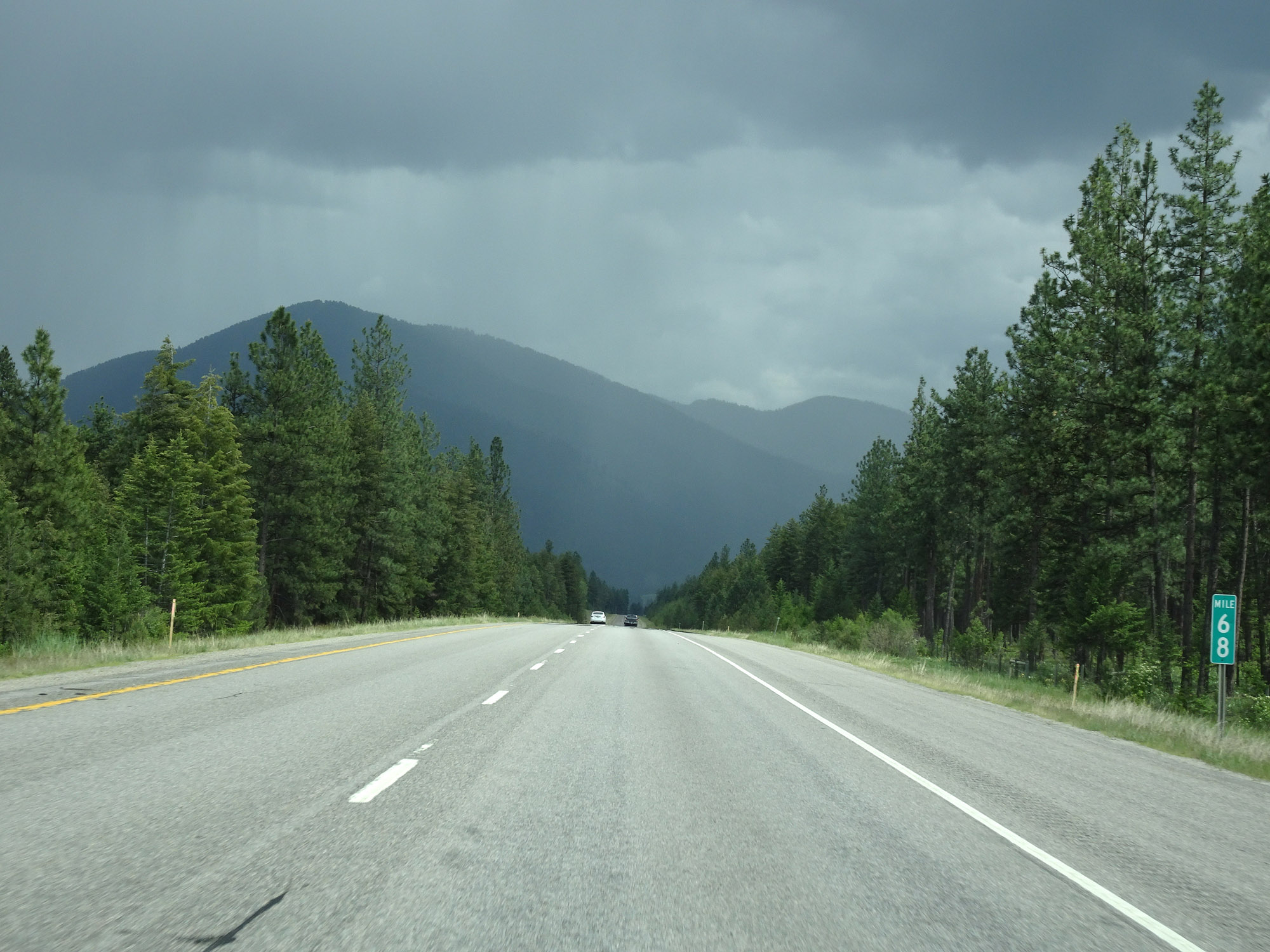
I am sitting at Les Schwab replacing tires that have not yet failed.

There are still many miles left in them. The question is whether they are the right miles for what lies ahead.

Soon I will begin a twelve-week grape-hauling season. Long days, heavy loads and changing road conditions will ask more of these tires than an ordinary trip across town. So I am replacing them early—not because they cannot carry me through today, but because I am responsible for where they must carry me tomorrow.

If I judged the tires only by today’s demands, replacing them might seem unnecessary. They brought me to the shop. They could probably take me home again. Nothing about them demands immediate attention.

The coming season does.

We tend to think of maintenance as repairing something that has broken. A warning light appears, a belt begins to squeal or a tire goes flat, and we respond. By then, however, maintenance has given way to an emergency.

Proper maintenance usually happens earlier and receives very little attention. No one sees the breakdown that never occurred. No one knows about the dangerous moment that was avoided or the delivery that arrived on time because someone acted before action became urgent.

Neglect is equally quiet.

It rarely announces itself with a catastrophe. More often, it whispers, “You can get a little more out of this.”

And sometimes we can.

One more trip. One more week. One more season.

Each time nothing goes wrong, postponement begins to feel like wisdom. We congratulate ourselves for extracting a little more value from something, never considering that we may be spending the margin we will need later.

Tires that perform adequately on a warm afternoon may tell a different story on a wet highway under a heavy load. The weakness was already present. The difficult conditions merely revealed it.

Life works that way too.

We often measure our condition by whether we are still functioning. We are getting the work done, meeting our obligations and making it home at the end of the day. Because nothing has failed, we assume everything is ready.

But being functional today is not the same as being prepared for tomorrow.

We should not wait until parts of our lives are completely worn out before caring for them. Our strength, our health, our relationships and our spiritual lives all require attention before something breaks.

Not everything needs to be replaced, of course. Some things need rest. Some need adjustment. Some need repair. Others simply need us to notice that the demands ahead will be greater than those behind us.

Maintenance is the discipline of paying attention before something has to cry out.

It is also an act of stewardship.

Stewardship is not squeezing the final mile out of everything we have been given. It is caring for what has been entrusted to us so that it remains dependable when it matters most. The consequences of neglect, however, rarely belong to us alone.

The grapes these tires will help me retrieve belong to us, and our winery depends upon their safe arrival. We have too much invested in the harvest to be careless about how it gets home.

But the road home does not belong to me. I will share it with people who know nothing about my grapes, our winery or the twelve-week season ahead. They should not have to bear the consequences of maintenance I chose to postpone.

Preparing well is one way I can honor both—the harvest I am bringing home and the people traveling beside me.

Soon the work at the tire shop will be finished, and I will drive away on new tires. Nothing dramatic will happen. There will be no evidence that replacing them early prevented anything at all.

That is all right. The best results of proper maintenance are often the things that never happen.

Today I am preparing for miles I have not yet traveled and responsibilities that have not yet arrived. Some things deserve our attention not because they have failed, but because they matter too much to wait until they do.

Until next time,

George

If this reflection brought someone to mind, perhaps share it with them.

Sounds Of Woodbine

The sun had not yet cleared the mountains when I sat outside our camper at Woodbine Campground and asked myself a simple question:

What do I hear?

First, water.

Not water I can see, but the distant roar of water bullied by gravity—cascading over boulders and ricocheting around bends laced with deadfall.

The sound never stops to catch its breath.

It is constant. Powerful. Soothing.

Then wind.

Driven by morning thermals, it moves through the trees, announcing the approach of the sun rising in the east. Leaves lift, brush against one another and settle before lifting again.

Above me, a little chipmunk clings to a branch no bigger around than one of his tiny fingers. He is eating the tender meat from the developing winged seeds of a Rocky Mountain maple.

What strikes me is that he chirps even while he eats.

I watch the effortless coordination of muscles and perfectly designed joints. They engage and release at precisely the right moments, balancing his body as he stretches for the next course while dropping what remains of the last.

The branch bends beneath him, but he never appears uncertain.

Several birds greet their neighbors. Each sings a gentle tune as if celebrating the gift of another day to live.

Psalm 104 could have been narrating the scene:

“The birds of the sky nest by the waters; they sing among the branches.”

For a few minutes, every sound seems to know its place.

Then comes the intrusion of a generator, brought to life by a nearby boondocker eager for the first ritual cup of coffee.

Its mechanical drone pushes its way into the water, wind and birdsong.

My camper contributes a few faint creaks and scratches of its own as it strains against the wind.

A dog barks in the distance.

Leaves rustle.

Then ten feet crunch across the gravel—two belonging to a woman and eight to the two light-colored Labrador retrievers sauntering beside her.

Sadie notices them, too. She announces the break in the calm with a break in the calm of her own.

Soon the Labradors pass, Sadie settles and the sounds of the morning find their places again.

I might have described this as a quiet morning.

But it wasn’t quiet.

It was crowded with sound.

What it lacked was demand.

The falls did not require a response. The wind did not ask to be understood. The chipmunk did not care whether I appreciated the extraordinary mechanics involved in his breakfast. The birds needed no applause.

Even the generator was simply the sound of someone else beginning another day.

Most of the sounds filling our lives arrive with an obligation attached. A telephone rings because someone wants an answer. A notification announces something that expects our attention. News arrives carrying another event we are supposed to understand, evaluate or worry about.

We are surrounded by sounds asking us to respond.

The sounds of Woodbine asked nothing of me.

They were already there before I began listening and would continue after I went inside. Woodbine Falls does not pause when no one is standing nearby to hear it. Birds do not wait for an audience before singing. The wind does not need our permission to move through the trees.

David wrote:

“The heavens declare the glory of God; the skies proclaim the work of his hands.”

The declaration I heard that morning came from water, leaves, wings, paws and song.

We sometimes call nature silent because it speaks without demanding an answer.

But it is not silent.

We simply have to become quiet enough to hear it.

Perhaps gratitude begins that way—not with something new arriving, but with finally noticing what has already arrived.

At 6:36 a.m. on August 1, 2026, I was surrounded by things I had not created, could not improve and did not need to explain.

For a few minutes, my only responsibility was to listen.

It was a great day to live.

The Space Between the Notes

I used to think music was made entirely of sound. Then I began paying attention to the rests.

I compose music. Much of composing involves deciding what should be heard—which notes belong in the melody, which chords should support them and what rhythm will carry the piece forward.

But a composer must also decide when nothing should be heard.

A rest is not an empty place where the composer ran out of ideas. It is written deliberately. It has a precise beginning and duration, and the musician must perform it as carefully as any note.

Enter too early and the right note becomes wrong. Wait too long and the music loses its intended movement.

Silence, it turns out, is not the absence of music.

It is part of the composition.

That can be difficult for a musician. When everyone around you is playing, doing nothing does not feel particularly musical. Your fingers are ready. Your eyes continue moving across the page. Everything in you anticipates the moment when you will contribute again.

But your assignment, for now, is to wait—and to remain attentive while doing it.

The temptation to fill an empty measure is not limited to musicians.

We live in a culture that rewards visible activity, quick answers and immediate reactions. When conversation grows quiet, we reach for words. When the house becomes still, we introduce noise. When prayer receives no immediate answer, we wonder whether God is listening.

When life stops moving at the tempo we prefer, we assume something has gone wrong.

So we rush to fill the measure.

I have done this more often than I care to admit. I have spoken when listening would have been more helpful. I have acted when patience would have been wiser. I have attempted to manufacture progress because waiting made me feel as though I was contributing nothing.

A composer can continue adding notes until every available space has been occupied. More melody. More harmony. More movement. Yet there comes a point when adding something else does not make the music richer.

It only makes it crowded.

Sometimes the most important decision a composer makes is not what to add, but what to remove.

Life can become crowded in the same way. We fill our schedules, conversations and thoughts until there is no room to hear anything beyond the noise we have created. We become so accustomed to activity that rest begins to feel irresponsible.

But rest was present from the beginning.

After six days of creation, God rested. Not because He was exhausted or had run out of ideas. His rest completed the rhythm of creation.

Jesus also withdrew from crowds and activity to spend time alone. Silence and solitude were not interruptions of His purpose. They were part of it.

Rest is not necessarily a reward for finishing everything. If that were the requirement, few of us would ever qualify.

Rest can be an act of trust. It acknowledges that the world continues turning when we stop pushing it. It reminds us that our worth is not measured entirely by our output and that God does not depend upon our constant activity to accomplish His purposes.

Some rests are chosen. Others arrive without invitation.

An opportunity disappears. A relationship changes. An expected answer does not come. A door closes, and we find ourselves standing in a measure we did not write and would prefer not to perform.

We can mistake those seasons for abandonment.

But perhaps we have simply reached a rest.

That does not make waiting painless or passive. A musician counting several empty measures must continue following the music. The performer listens, counts and prepares for the next entrance.

There is a difference between resting and quitting.

Quitting abandons the composition. Resting remains attentive to it.

Perhaps your work feels unproductive, your prayers seem unanswered or the direction that once felt clear has become uncertain. You may be tempted to play something—anything—just to break the silence.

But an early note can disturb what is being created.

There are moments when faithfulness sounds like action. There are others when faithfulness sounds like silence.

The wisdom is knowing which measure we are in.

Music requires both sound and silence. Life does too. The notes allow us to express what is within us. The rests give us room to listen for what comes next.

If life seems unusually quiet right now, don’t assume the song is over.

The silence may be part of the music.

The Names Closest to Us

This morning, I came across some information about my parents that surprised me.

I mentioned it to Selena several times throughout the day. I also checked with my sister to see whether she knew anything about it. She didn’t provide the immediate explanation I was looking for, so the information remained one of those loose threads the mind keeps tugging when it should be occupied with something else.

On Sunday evenings, I have a Zoom call with my children. We began the practice during COVID, when isolation forced families to find new ways of occupying the same room. The restrictions eventually lifted, but our weekly gathering remained.

Tonight, I mentioned what I had discovered to my boys.

One thing led to another, and Selena produced a document I had received some time ago but never read. It was a genealogy written by my father.

I scanned the document, sent copies to my children and began reading.

My father spent seventy-four pages remembering people he had never met.

He traced names through courthouse records, cemetery inscriptions, marriage certificates, land transactions and family stories. He followed generations across states and, when the evidence permitted, across oceans. He constructed an elaborate numbering system in which every digit and letter identified another person’s place on the Burgin family tree.

Some of the people recorded there had been dead for centuries. Yet he searched for their birthplaces, spouses, children, migrations and final resting places. He tried to distinguish documented history from family tradition and left spaces where information had escaped him.

On a page titled “Why Study Genealogy?” he asked:

“Do you want your grandchildren to know who you are? Of course you do, but we forget so easily.”

That sentence may explain the entire project.

My father understood that forgetting happens quietly. A name disappears from conversation. A photograph loses its identification. A story is remembered by one generation, partially repeated by the next and buried with the generation after that.

He was attempting a rescue operation.

The manuscript was eventually typed from his original notes by a coworker named Ginny. He took it to a family reunion, gathered additional information and intended to produce an updated version.

He died before finishing it.

What remained was a working history—imperfect, speculative in places and occasionally contradicted by better evidence. Yet it is still a remarkable record of his curiosity, persistence and desire to preserve something that might otherwise disappear.

But as I moved through the pages, I encountered something I did not expect.

The closer the genealogy came to my father, the thinner and less accurate it became.

The distant branches received names, dates, marriages, children and stories. When the record reached his own family, the information was incomplete or wrong.

The inaccuracies were not hidden among distant branches of the family tree.

My birthday is wrong. My son Jared’s birthday is wrong. My sister’s husband is represented by a blank space before his last name.

These were not ancestors separated from my father by centuries. They were his children, his son-in-law and his grandson. Their information did not need to be excavated from a courthouse basement or deciphered from a weathered headstone.

It only needed to be known.

That is where my surprise began turning into hurt.

Then I reached the bottom of one page and turned to the next.

My father had written that he made several mistakes in his life. The sentence continued across the page break:

“Two of them was getting married and the other one was when his children were growing up. He says, ‘I lost it, but life will go on.’”

Immediately beneath those words appeared the heading:

“Children by George and Kay.”

Then he began listing his children.

I am one of those children.

I do not know precisely what my father meant. I don’t know what he believed he had lost or whether those words adequately expressed what he intended to say.

I only know what it felt like to read them.

The man who carefully recovered the names of distant relatives from obscurity left his own children standing beneath a sentence about regret and loss.

That hurt.

The temptation is to make the manuscript testify against him—to treat every omission as a verdict, every mistake as proof of indifference and that painful sentence as the final explanation of our relationship.

But that would require me to claim knowledge I do not possess.

The manuscript demonstrates that my father cared about family. What remains uncertain is what the word “family” meant to him.

Perhaps he understood family primarily as lineage: a shared name moving through history, connecting one generation to another. Family, in that sense, is ancestry, migration, continuity and inheritance.

But lineage is not the same thing as relationship.

A family tree can tell us who belonged to whom. It cannot tell us whether they were known, heard, encouraged or loved well.

Genealogy is orderly. Living families rarely are.

The dead remain where the records place them. They make no new decisions, raise no objections and offer no competing memories. Their names can be arranged into generations, and the empty spaces between dates can sometimes be filled with an appealing story.

The living are more complicated.

They change. They struggle. They disappoint us and are sometimes disappointed by us. They remember events differently. They need things from us that cannot be satisfied by adding another name to a page.

Perhaps it is possible to love the idea of family while struggling with the demands of relationship.

That possibility would be easy to assign entirely to my father. It would also allow me to avoid a more uncomfortable question:

Do I know the people closest to me as carefully as I know the things that interest me?

I may know the history of a place but not the disappointment one of my children is carrying. I may remember the accomplishments of someone who died a century ago while overlooking the quiet courage of the person sitting across from me. I may preserve photographs, dates and stories for future generations while failing to be fully present with the generation sharing my life today.

Records are important. Stories matter. I am grateful my father cared enough to gather both.

But preserving a family requires more than remembering its past. It requires paying attention to its present.

The most important family history is still being written around our tables, during telephone calls and, sometimes, among a collection of faces arranged across a computer screen every Sunday night.

It is written when we ask another question and remain long enough to hear the answer. It is written when we remember what someone is facing, acknowledge where we have been wrong and choose relationship over the comfort of our own version of events.

My father feared that we forget too easily.

He was right.

But forgetting is not limited to names disappearing from old records. We can also forget to notice the people standing directly in front of us.

His manuscript preserved hundreds of names. It also left a few unexpected spaces, several incorrect details and one sentence I wish I had never needed to read.

I cannot fill those spaces for him, rewrite his words or know with certainty what he intended.

I can, however, decide what those words will produce in me.

I want to honor the people who came before me by remembering their names and preserving their stories. But I also want to honor the people beside me by knowing them accurately, listening to them carefully and loving them while there is still time to do so.

Someday, my name may occupy a line in someone else’s family history.

Until then, I intend to keep showing up on Sunday nights.

I want my children to know that their place in my life is not beneath a sentence about regret. Their names are not merely branches in a genealogy or details to be recorded accurately.

They are among the best parts of my story.

And I want to make certain that the names closest to mine are never the people I know the least.

The People Who Make Room

Today I watched three drivers do something for which no one will ever thank them.

They surrendered the road that rightfully belonged to them—not because they were wrong, but because someone else was.

I was leading a line of five vehicles along a two-lane highway. The double yellow lines dividing the road made their instruction unmistakable: “Whatever you’re thinking about doing, don’t.”

A vehicle from behind us pulled into the oncoming lane and began passing all five cars.

Then three vehicles appeared in the distance, traveling toward us.

The passing driver continued to accelerate. The distance between the vehicles disappeared far more quickly than I thought possible. With nowhere else to go, all three oncoming drivers moved onto their right-hand shoulder.

At the closest point, the passing vehicle was probably three car lengths from a head-on collision.

Three car lengths stood between an ordinary drive and an unimaginable tragedy.

The driver eventually returned to the proper lane directly in front of me, having risked so much to gain what amounted to ten feet of pavement.

I was angry.

For several miles, I hoped the driver would pull into a gas station or stop at a store. I wanted an opportunity to ask whether those ten feet were worth placing so many lives in danger.

I rehearsed the question in my mind. I imagined delivering it calmly but firmly, allowing its inescapable logic to bring the driver to an immediate realization.

The vehicle never stopped.

Eventually, my attention shifted away from the person who had created the danger and toward the three people who had prevented the tragedy.

None of them had crossed the center line. They weren’t speeding toward an imagined finish line. They were simply traveling in their own lane, on their own side of the highway, doing exactly what they were supposed to do.

They had the right of way.

But when someone else made a terrible decision, they didn’t defend their rightful place on the road. They moved.

Three strangers, acting almost simultaneously, surrendered what belonged to them so that everyone could make it home.

We will never know their names. There will be no newspaper article celebrating their actions. No awards will be presented, and they probably won’t receive so much as a wave of appreciation from the driver whose life they helped save.

Yet their awareness, restraint and willingness to make room deserve to be remembered.

There is no shortage of people willing to tell us when someone has crossed a line. We are surrounded by voices eager to identify what is wrong, assign blame and defend their right to occupy a particular piece of ground.

Sometimes those voices are correct.

Lines matter. Right and wrong matter. The reckless driver had no right to be in that lane, and the approaching drivers had every right to remain where they were.

But being right would not have protected them from the collision.

So they made room.

Making room does not mean pretending another person’s actions are harmless. It does not erase responsibility or transform a wrong decision into a right one. It simply recognizes that there are moments when preserving a life, a relationship or another person’s future matters more than defending the ground to which we are entitled.

That is grace.

Grace moves toward the shoulder when another person has left us too little room. Grace absorbs an inconvenience it did not create. Grace sometimes surrenders the right of way—not because the other person deserves it, but because love values people more than position.

Jesus said, “Blessed are the peacemakers.”

Peacemakers are not people who deny that conflict exists. They see the danger clearly. They recognize when lines have been crossed and know precisely who had the right of way.

They simply refuse to let being right become more important than doing what might save someone.

I began the drive thinking about one reckless person. I ended it thinking about three gracious ones.

That is the story I want to remember.

I want to remember the people who were observant enough to see danger coming, humble enough to surrender their rightful space and wise enough to understand what mattered most in that moment.

More than that, I want to become one of them.

When someone crosses a line, I hope I will have the wisdom to recognize the danger without allowing anger to control my response. When another person’s mistake leaves too little room, I hope I will value restoration more than vindication. When I must choose between proving that I am right and preventing something from being needlessly broken, I hope I will know when to move toward the shoulder.

The world has plenty of people willing to defend their piece of the road.

I want to be known as someone who makes room.

The Sign Guy Without A Sign

CarveLike most iPhone users, I have a love/hate relationship with Siri.  The guidance offered by her electronic vocal chords generally gnaws on my nerves while leaving me wondering why I subject my life’s traverse to a programmer in Northern California.

You’re familiar with the procedure:  Push and hold the “home” button and wait for her to acknowledge your summons…

“Beep, beep.”

“Take me to the nearest sign shop.”

“Did you say, ‘wine shop’”?

“No.  Take me to the nearest sign shop.”

After selecting the closest sign maker from her offerings, I obediently followed the cues to a site on Front Street.

We needed a sign to affix to the outside of our new church building in Butte, Montana.  A sign is important because it tells the public who you are and sets some expectation about what people can find inside.

Without much misdirection I arrived outside a building bearing 804 as the only other confirmation I had reached my destination.  Quickly scanning the building, I noticed a blinking “Open” sign in the window.  I exited my vehicle and after approaching the door, reached for the handle and pulled.  Being bested by a magnet in the top left corner sent my eyes looking for a solution.  “Push the button for service” was posted just above a metal box to the left of the door.  So, wanting service, I pushed the button.

“Yeah.”

“Can I come in?”

The faint hum of electricity granted me entrance into the building.

I immediately stood in a hallway.  Looking both directions, each way provided 20 feet of carpet leading to the next expanse.  A taller person might have missed the little red arrow affixed to the wall at knee level pointing would be adventurers to the left.

The customer at the service counter had long gray hair.  Not the gray you get for $8 at the local beauty college but the gray that absorbs light; dull, dingy – almost sepia like.  He was leaning in such a way that his center of gravity jumped through the service window to an employee with gauges the size of golf balls.  The millennial accessorized his mutilated ears with ingots thrust through his eye brows and lower lip.  He wore a black knitted cap with white paint screened deep into its fibers in the shape of a skull.  The gray-haired man was filling out what looked like a job application.

“Business is booming in Butte” I thought trying to find an explanation for why I was standing four deep in a line to order a sign.

Abstract art hung on the walls of the large, brightly lit room.  Scattered magazines lay on top of the forty-two inch round table at my rear.  One magazine in particular – you know, one of those oversized ones?  The cover image was a grunge guy leaning against a wall crossing his arms against his midriff.  Entertaining some way he paid for all that ink, I wondered how many banks owned his house.  I couldn’t help but notice the title at the top of the half-inch stack of high gloss paper all glued together that read, “Hanabis”.

“Ok, all I need now is your driver’s license.”

I watched as the man dipped into his back pocket to retrieve his billfold and hand over his identity.

As if my suspicion wasn’t already redlined, all the components of this experience: the door, the music, the old guy, the millennial, the abstract art, the over-sized magazine – it all came into focus when, in one rehearsed transaction, the younger handed the older…a green card.

“I’m in a marijuana shop…” , the synapses of my brain crashed together.

I caught eyes with the satiated gray-haired man as he silently hobbled past me.   Before the next customer could begin her personal iteration of a jackpot I asked, “Hey, is this a sign shop?”

“No, we’re medical marijuana.”

“Where’s the sign shop?”

“Next door.”

“Next door” was only a room full of unlabeled boxes and metal shelving.  Acting on the last remaining option, I exited the building.

One hundred feet away was a descending ramp leading to a rickety old door left open about two inches.  Peering inside took me to a place I remembered seeing on the 27 inch color TV in our living room when I was a kid watching Pinocchio.  The scene was dark and dusty.  The rays of luminance from the windows cast shadows on the concrete floor revealing the corkscrew shaves of wood – the evidence of effort from the man standing at the table in the center of the room.

A real life Geppetto, the sign maker wielded a wooden mallet and a chisel.

“Tick.”   “Tick.”   “Tick.”  Each instance sending more material to the cold floor.

The answer seemed obvious, but I was compelled to ask,  “Is this a sign shop?”

I entered the shop introducing myself with a smile and a handshake.  His strong, leathery hand was the antithesis of his face and voice.  We laughed together as I told him about my trip to the marijuana shop.  He indicated I wasn’t the first.

“You know why, John?  You’re the sign guy without a sign.  Your business isn’t properly marked.  Nothing outside promises I’ll get what I’m looking for – a sign.”

Stop and think about that for a minute.  Isn’t a sign guy without a sign very similar to a Christian without the outward evidence of an inward Christ?

Did you know you’re being watched?  Dozens, perhaps hundreds, of people are watching you and me looking for some external evidence of the goodness we so commonly profess.  But, what are people seeing? Well, that’s for you to control.  And, that’s the lesson learned from the sign guy who doesn’t have a sign.

PS.  I think I figured out what “Hanabis” is.  It must be the combination of hemp and canabis – Hanabis.

The Richest Hill On Earth

Headframe in Butte

I took this image in the early morning at what is called “the Con” on the hillside overlooking the community of Butte, Montana.

I’ve recently taken up residence and ministry on what is purported to be “The Richest Hill on Earth”.  Headframes dot the landscape of the mining city known as Butte America, named such before Montana became the 41st State in 1889.  During the late 1800’s and early 1900’s, Silverbow County (Butte and suburbs) boasted a population of over 100,000 people who survived on the extraction of copper and other precious minerals from the earth.  After WWI, declining copper prices and market saturation from South American countries such as Argentina drove many to seek their livelihood elsewhere.  Today, Butte has stabilized and the community of 35,000 is striving to reinvent itself in a way that matches it’s former glory.

Historically, there’s been no shortage of attempt to bring the Gospel to Butte.  Many have tried and unfortunately, many have failed.  Immediately after moving here I started meeting with many of Butte’s 49 pastors and priests; guys barely surviving in the trenches, each lacking the confidence to go on an all out attack.  Their stories have a glaring commonality:  discouragement, disillusionment and confusion about what each of them described differently but iterated the same as the “Butte Nut”.  The collection of their voices states, “I don’t know how to reach this community.”  I took note.

One thing I know:  Jesus died for Butte just as He died for Portland, Seattle and Billings.  You name the city.  Yet, each of those cities, and the city God has you laboring in, are different and present unique challenges that need to be considered for the Gospel to make sense in a localized context.  In other words, what works in Seattle might not necessarily work in Boston – a completely different culture with completely different and sometimes competing values.  It’s a huge ministry fail to bring a Seattle ministry template to another city and think it’s going to work without at least a few major tweaks.  Separated by geographic and social distinctions, people are different and ministry demands a creative strategy.

This is how I would explain the many failed attempts to bring the Gospel to Butte, Montana.  Hundreds of God fearing men and women have brought their ministry template from various other cities only to leave a couple years later scratching their head and wondering why it didn’t work.  Dreams are dashed and confidence, resolve and passion lay aside in lifeless piles.  Here’s a sad Butte fact:  On any given Sunday less than 1000 Protestants gather in worship services and less than 1500 gather for Mass.

So, I’ve had to ask myself a question.  “What will make me any different?  How will Harvest Church in Butte, Montana be any different?”  It’s a sobering question whose answer has brought me to my knees many times since moving to this community five months ago.

Go ahead and ask yourself the same questions.  When you consider your ministry in your city, go ahead and ask, “What will make me (you) any different?  How will (your church) in (your city) be any different?”  As you’re seeking answers, consider these important things:

Know Your City

Your city is unique.  It has a personality.  It has societal disappointments, victories and challenges.  The key to fruitful ministry is developing a strategy unique to the identity of your community that understands the goal is salvation and restoration.

Specifically, Butte is a literal melding pot of cultures and methodologies once opposed to each other.  During its rise, people from all over the world came to Butte America to scratch out their share of the bounty.  The history of Butte is replete with lore regarding these oppositions.  However, hardship and demise have a way of helping to erode the walls of difference and find the basic components necessary for survival.  The 2004 tsunami that struck the island nation of Indonesia is a recent example.  In the aftermath of a pounding wave the need to survive leap frogged culture, language and religious barriers as people joined together in the common goal of preservation.  After the “crash” post WWI, Butte experienced it’s own iteration of this human phenomena that resulted in a community able to recognize and celebrate it’s differences and become very relationally connected and interdependent.  In short, they recognized that in order to survive, they needed each other.

In the brief time I have lived here, I have discovered a community that values relationships, diversity and benevolence.

An example of the importance of the benevolence value can be found in the startup of a local Butte hockey team that failed because “…they never did anything for the community.”  So people never went to the games and it led to their bankruptcy after one season.

What your community values is very important.  These values must be weaved into the strategy designed to bring the Gospel to your harvest field.  But, you must know your city.

You’re God’s Representative – Be A Church That Matters

We, Harvest Church – Butte, are about to move into our own facility – a 12,000 sf Christian Science Reading room built in 1920 and was abandoned 14 years ago.  Yes, I’m fully aware that we’ve assumed a space formerly used by a cult and are believing God’s redemptive power can even sanctify brick and mortar.  We’ve been gathering at Butte High School and have been mobile.  I actually like being mobile but mobility serves up costly logistical challenges that are alleviated by a permanent facility.

A permanent facility is going to help us matter more in the community.  For one, being mobile limits our availability to address daily needs because no one knows where to find us on Monday or Tuesday or even on Saturday.  Because we’ve chosen a strategically located billboard to advertise our location and sermon series content, we are known as the “Billboard Church”.  Hey, at least people are noticing!  But, simply having a building (or even a billboard) isn’t going to be the sole component of our level of mattering.  It must be accompanied with strategic and life-giving ministry expressions.  And, it begins with me and…you.

A couple weeks before Christmas and before our new space had any electrical service, any work we did had to be done during daytime hours because without power we didn’t have lights.  We needed to move 11 sections (12 seats each) of theater style seating to make way for our increased stage size and the AVL (audio, video, and lighting) station at the rear of the sanctuary.  I approached the local rescue mission and employed five strong men, offering them $20 cash and lunch to help move the seating into a storage area in the basement of the building.

On the move day, after selecting a leader from their ranks and seeing them wrangle the first section, I took the stairs to the basement.  Their 850 foot traverse would take them outside, down the sidewalk to the front of the building, through a wide doorway and to the storage area.  I waited in the storage area for several minutes and to my surprise nobody came.  image1Seeking a reason for their latency, my exploration took me outside to find my new employees, some seated and some standing, taking a smoke break.  I chuckled and went back to the storage area and waited.  A couple more minutes produced the first section of seating and sent the brutes off for the second section.  I ascended the stairs and found them working on the second section of heavy, metal framed seating.  Out they went and down I went to the storage area.  When they didn’t arrive after a few minutes I went outside and found them taking another smoke break.  I chuckled and waited.

This same scenario actually played out for the first eight sections of chairs and what I thought would take about an hour had already been 90 minutes.  To expedite the project, I decided to lead the crew for the remaining three sections.  Those last sections were arduous.  Without sectional smoke breaks and muscles wearing thin, attitudes lowered and tempers flared.  I actually started laughing at their creative use of colorful expletives.  Finally finished and after two hours of hard labor, it was time to eat lunch.

I took the boys to a local sports bar called Metals; a restaurant fashioned from an old bank of the same name.  I drove ahead of them as they walked the six blocks to the restaurant.  As they entered I was talking to another gentleman who had asked me for $2.00.  I declined to give him cash but offered to purchase him lunch.  While my crew was finding a table I spoke to Randy about God’s love for him and my pleasure to buy him lunch.  I offered Randy a seat at our table but he declined; a decision probably aided by the stare down he received by my crew as they entered the establishment.

I joined the guys at the table and offered them anything they wanted on the menu.  I never imagined my offer would produce a couple rounds of 12oz Bud Lights, appetizers and meals all around.  I have to admit that I cringed just a bit wondering how I would explain the purchase of beer to our bookkeeper.

Conversation jumped many lines from curiosity as to why I bought Randy (a guy they all knew) lunch to one of them claiming his hatred for God and his bewilderment at working in a church for the morning.  I could tell from their antics and conversation that they had no idea that I was the pastor of the church.  It wasn’t until a lady from our church recognized me and approached our table that they figured out who I was.

“Hello, Pastor George.  Who are these guys you’re having lunch with today?”

I watched as their cheery faces fell lifeless with limp jaws.  After the congregant made her exit, John who sat at my left asked, “Are you the pastor of the church?”

I confirmed his inquiry and the table erupted.  In one wide motion, John exclaimed while waving his finger like he’d just equipped a sickle, “We should be ashamed!  We ordered beer!  You…you said you hated God!  This is the pastor of the church!”  I laughed and their shoulders sunk.  “We thought you were the contractor!”

What I said next could only come from God and His leading.  “My friends.  All I ask is that you be yourselves because I’m going to be myself.  As long as we stay true to that, we’re going to get along just fine.  I don’t want you to pretend around me.  I can take whatever you dish out.  Now, I need to pay you.”

I then passed each of them $40 cash to which one of them asked, “I thought we were just going to get $20?”  I replied, “Well, it was $20 per hour and we worked two hours.  But let me say something about that.  I want you to consider this $40 as God’s gift because you don’t deserve it.  Yes, it took us two hours to move eleven sections of chairs but you also took a smoke break for each of the first eight sections.  It takes approximately seven minutes to smoke a cigarette.  You basically spent one of the two hours smoking.  So this money is representative of God’s love and grace – which we don’t deserve.  I don’t deserve it and neither do you.  However, God extended grace to us when Jesus died on the cross.  So, accept this payment as a reminder of God’s love for you.  And, I hope that in the future you’ll remember this lunch and you’ll remember a pastor in Butte, Montana who tried to show you a picture of God’s grace.”

There was an obvious contemplative silence among them and we just sat there.  I told them about our church and invited them to attend our Christmas Eve service.  They came.  And two of them have been coming since.  In order to be a church that matters we have to be people that matter.  And, it starts with you.

God is doing something unique on the “Richest Hill on Earth”.  I suspect it might be one of the ripest fields of harvest too.