The People Who Make Room

Today I watched three drivers do something for which no one will ever thank them.

They surrendered the road that rightfully belonged to them—not because they were wrong, but because someone else was.

I was leading a line of five vehicles along a two-lane highway. The double yellow lines dividing the road made their instruction unmistakable: “Whatever you’re thinking about doing, don’t.”

A vehicle from behind us pulled into the oncoming lane and began passing all five cars.

Then three vehicles appeared in the distance, traveling toward us.

The passing driver continued to accelerate. The distance between the vehicles disappeared far more quickly than I thought possible. With nowhere else to go, all three oncoming drivers moved onto their right-hand shoulder.

At the closest point, the passing vehicle was probably three car lengths from a head-on collision.

Three car lengths stood between an ordinary drive and an unimaginable tragedy.

The driver eventually returned to the proper lane directly in front of me, having risked so much to gain what amounted to ten feet of pavement.

I was angry.

For several miles, I hoped the driver would pull into a gas station or stop at a store. I wanted an opportunity to ask whether those ten feet were worth placing so many lives in danger.

I rehearsed the question in my mind. I imagined delivering it calmly but firmly, allowing its inescapable logic to bring the driver to an immediate realization.

The vehicle never stopped.

Eventually, my attention shifted away from the person who had created the danger and toward the three people who had prevented the tragedy.

None of them had crossed the center line. They weren’t speeding toward an imagined finish line. They were simply traveling in their own lane, on their own side of the highway, doing exactly what they were supposed to do.

They had the right of way.

But when someone else made a terrible decision, they didn’t defend their rightful place on the road. They moved.

Three strangers, acting almost simultaneously, surrendered what belonged to them so that everyone could make it home.

We will never know their names. There will be no newspaper article celebrating their actions. No awards will be presented, and they probably won’t receive so much as a wave of appreciation from the driver whose life they helped save.

Yet their awareness, restraint and willingness to make room deserve to be remembered.

There is no shortage of people willing to tell us when someone has crossed a line. We are surrounded by voices eager to identify what is wrong, assign blame and defend their right to occupy a particular piece of ground.

Sometimes those voices are correct.

Lines matter. Right and wrong matter. The reckless driver had no right to be in that lane, and the approaching drivers had every right to remain where they were.

But being right would not have protected them from the collision.

So they made room.

Making room does not mean pretending another person’s actions are harmless. It does not erase responsibility or transform a wrong decision into a right one. It simply recognizes that there are moments when preserving a life, a relationship or another person’s future matters more than defending the ground to which we are entitled.

That is grace.

Grace moves toward the shoulder when another person has left us too little room. Grace absorbs an inconvenience it did not create. Grace sometimes surrenders the right of way—not because the other person deserves it, but because love values people more than position.

Jesus said, “Blessed are the peacemakers.”

Peacemakers are not people who deny that conflict exists. They see the danger clearly. They recognize when lines have been crossed and know precisely who had the right of way.

They simply refuse to let being right become more important than doing what might save someone.

I began the drive thinking about one reckless person. I ended it thinking about three gracious ones.

That is the story I want to remember.

I want to remember the people who were observant enough to see danger coming, humble enough to surrender their rightful space and wise enough to understand what mattered most in that moment.

More than that, I want to become one of them.

When someone crosses a line, I hope I will have the wisdom to recognize the danger without allowing anger to control my response. When another person’s mistake leaves too little room, I hope I will value restoration more than vindication. When I must choose between proving that I am right and preventing something from being needlessly broken, I hope I will know when to move toward the shoulder.

The world has plenty of people willing to defend their piece of the road.

I want to be known as someone who makes room.
The Sign Guy Without A Sign

CarveLike most iPhone users, I have a love/hate relationship with Siri.  The guidance offered by her electronic vocal chords generally gnaws on my nerves while leaving me wondering why I subject my life’s traverse to a programmer in Northern California.

You’re familiar with the procedure:  Push and hold the “home” button and wait for her to acknowledge your summons…

“Beep, beep.”

“Take me to the nearest sign shop.”

“Did you say, ‘wine shop’”?

“No.  Take me to the nearest sign shop.”

After selecting the closest sign maker from her offerings, I obediently followed the cues to a site on Front Street.

We needed a sign to affix to the outside of our new church building in Butte, Montana.  A sign is important because it tells the public who you are and sets some expectation about what people can find inside.

Without much misdirection I arrived outside a building bearing 804 as the only other confirmation I had reached my destination.  Quickly scanning the building, I noticed a blinking “Open” sign in the window.  I exited my vehicle and after approaching the door, reached for the handle and pulled.  Being bested by a magnet in the top left corner sent my eyes looking for a solution.  “Push the button for service” was posted just above a metal box to the left of the door.  So, wanting service, I pushed the button.

“Yeah.”

“Can I come in?”

The faint hum of electricity granted me entrance into the building.

I immediately stood in a hallway.  Looking both directions, each way provided 20 feet of carpet leading to the next expanse.  A taller person might have missed the little red arrow affixed to the wall at knee level pointing would be adventurers to the left.

The customer at the service counter had long gray hair.  Not the gray you get for $8 at the local beauty college but the gray that absorbs light; dull, dingy – almost sepia like.  He was leaning in such a way that his center of gravity jumped through the service window to an employee with gauges the size of golf balls.  The millennial accessorized his mutilated ears with ingots thrust through his eye brows and lower lip.  He wore a black knitted cap with white paint screened deep into its fibers in the shape of a skull.  The gray-haired man was filling out what looked like a job application.

“Business is booming in Butte” I thought trying to find an explanation for why I was standing four deep in a line to order a sign.

Abstract art hung on the walls of the large, brightly lit room.  Scattered magazines lay on top of the forty-two inch round table at my rear.  One magazine in particular – you know, one of those oversized ones?  The cover image was a grunge guy leaning against a wall crossing his arms against his midriff.  Entertaining some way he paid for all that ink, I wondered how many banks owned his house.  I couldn’t help but notice the title at the top of the half-inch stack of high gloss paper all glued together that read, “Hanabis”.

“Ok, all I need now is your driver’s license.”

I watched as the man dipped into his back pocket to retrieve his billfold and hand over his identity.

As if my suspicion wasn’t already redlined, all the components of this experience: the door, the music, the old guy, the millennial, the abstract art, the over-sized magazine – it all came into focus when, in one rehearsed transaction, the younger handed the older…a green card.

“I’m in a marijuana shop…” , the synapses of my brain crashed together.

I caught eyes with the satiated gray-haired man as he silently hobbled past me.   Before the next customer could begin her personal iteration of a jackpot I asked, “Hey, is this a sign shop?”

“No, we’re medical marijuana.”

“Where’s the sign shop?”

“Next door.”

“Next door” was only a room full of unlabeled boxes and metal shelving.  Acting on the last remaining option, I exited the building.

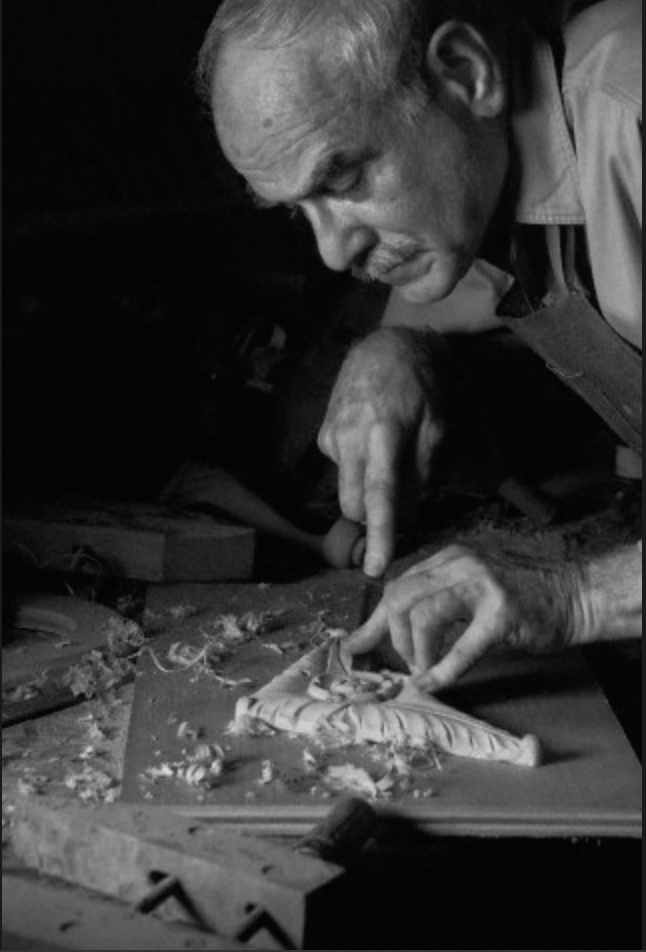
One hundred feet away was a descending ramp leading to a rickety old door left open about two inches.  Peering inside took me to a place I remembered seeing on the 27 inch color TV in our living room when I was a kid watching Pinocchio.  The scene was dark and dusty.  The rays of luminance from the windows cast shadows on the concrete floor revealing the corkscrew shaves of wood – the evidence of effort from the man standing at the table in the center of the room.

A real life Geppetto, the sign maker wielded a wooden mallet and a chisel.

“Tick.”   “Tick.”   “Tick.”  Each instance sending more material to the cold floor.

The answer seemed obvious, but I was compelled to ask,  “Is this a sign shop?”

I entered the shop introducing myself with a smile and a handshake.  His strong, leathery hand was the antithesis of his face and voice.  We laughed together as I told him about my trip to the marijuana shop.  He indicated I wasn’t the first.

“You know why, John?  You’re the sign guy without a sign.  Your business isn’t properly marked.  Nothing outside promises I’ll get what I’m looking for – a sign.”

Stop and think about that for a minute.  Isn’t a sign guy without a sign very similar to a Christian without the outward evidence of an inward Christ?

Did you know you’re being watched?  Dozens, perhaps hundreds, of people are watching you and me looking for some external evidence of the goodness we so commonly profess.  But, what are people seeing? Well, that’s for you to control.  And, that’s the lesson learned from the sign guy who doesn’t have a sign.

PS.  I think I figured out what “Hanabis” is.  It must be the combination of hemp and canabis – Hanabis.

Richard

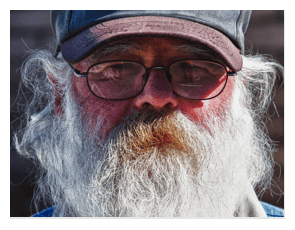
I met a guy a couple weeks ago named Richard in the Elkhorn Yacht Club parking lot on Thanksgiving day.  My eyes were fixed on him as he fiddled with some fishing gear at the tailgate of his rusty, vintage 1970’s Ford pickup.  After several minutes, I approached him and asked if I could take his picture.  Specifically I asked, “Sir, do you mind if I take your picture?”

“Yes, I mind” was his quick reply.

However dissatisfied with his answer, I compliantly said, “ok”.

As I was turning to walk away he asked, “Why do you want my picture?”

“It’s because you typify a sailor and I wanted a picture of a sailor.  And, I just think you look really cool.”

Responding to my compliment he said, “Ok, you can take my picture.”

I quickly snapped one shot trying to balance unfavorable luminance with Richard’s seeming crepuscular demeanor.

I put out my hand and while Richard reciprocated, I thanked him.  I mentioned living in Montana and being down at Moss Landing for Thanksgiving with my sister, a resident of California.

“Montana, hmm…Montana.  I think my son lives in Montana.  Is there a place there called, Palistal or Teliscal…?”

“You mean, Kalispell?”, I offered.

“Yeah, yeah…Kalispell.  That’s where he lives.”

Kalispell is in the northwest corner of Montana and a several hour drive from where I lay my head most nights.  It’s located seven miles from Flathead Lake and 31 miles from of Glacier National Park.  It’s a place known for ice-carved mountains and inviting beauty.

It didn’t take a detective to conclude Richard’s lack of relationship with his son.  I mean, he didn’t even know how to enunciate Kalispell…  Brining my hunch to fruition I said, “Richard, I’m just going to guess that you don’t know your son very well.  I never knew my father and it’s been the single biggest void of my life.  You need to know that it’s probably your son’s single biggest void also.”

It’s uncertain who was more stunned by my allegation.  I expected Richard to disregard my personal history lesson by getting back to his fishing tackle or worse, by throwing a hay-maker my way.  Yet, instead of enmity, Richard starred at me; obviously taken to a place 1200 miles north of our position.  He was engaged.  As he sat on the tailgate jutting out from the rear of his rust-bucket, I told him my story.  It’s a story that concludes with God, my heavenly Father, filling the void left by my earthly father.  It’s a story that illustrates God’s plan for my life through a relationship with Jesus Christ, my sin bearer.  It’s a story that offers forgiveness, understanding and hope for a better tomorrow.  It’s a beautiful story.

Our conversation ended two hours later with me inviting him to eat Thanksgiving dinner with my family.  His reaction confirmed he wouldn’t show.  He’s a loner who allowed me a rare opportunity to invade his isolation for just a couple of hours.  I encouraged him to call his son and to get reacquainted.  For Richard’s and his son’s sake, I hope he does.

The Seal That Is Changing My Life

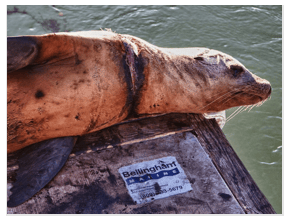
Actually, all I could do is stare; mouth wide open getting angrier by the moment.  At a distance, the lonely seal just looked out of place, separated from the community almost as if it was ostracized.  A withdrawn seal among a community of seals – and I mean a community!  They were laying all over each other, busy and active, barking and jawing each other.  But not this one.  This one was different.  This one was detached.  This one was declining.

I recently got home from spending a week at Moss Landing over the Thanksgiving holiday.  Moss Landing is a small beach community about 10 miles north of Monterey on the central coast of California.  It’s a striking place with rocky waterfronts, coarse, sandy shores and thousands of barking sea lions.

It was Thanksgiving day.  My sister was busily preparing a wonderful feast complete with roasted turkey, wild rice and mashed potatoes.  While she was crashing pots and pans in the kitchen, I wanted to witness crashing waves.  I knew there was a dock full of sea lions about a mile away, near Elkhorn Slough, so Selena and I headed there lugging our cameras.  We gingerly strolled up the pavement barely able to hear each other talk because of the noise and breeze produced by dozens of passing vehicles annoyingly hugging the shoulder.  About the time you get to the bridge spanning the Slough is the about the time you start hearing barking seals.  Halfway across the overpass you begin seeing literally hundreds of seals bathing in the sun.  We quickly made our way to the jagged shoreline taking dozens of pictures of these extremely social mammals.

It was fun to watch them interact with each other.  They were spry, energetic and playful.  I wondered for a moment what an existence would be like with not much to care about other than when the next meal would be brought in by the tide.  The next moment was spent observing the scars left from close encounters with propellers resident on many of their backs and sides.  It was while I was agonizing over their disfigurement that I noticed one disunited, motionless seal fixed on the very edge of the dock.  I had to get a closer look.

Aided by my new vantage point, I could see the problem; a wrapped fishing line had caused a one and a half inch laceration around the seals neck.  It was dying; all because of the carelessness of a fisherman too preoccupied to care about the peril his monofilament, with a tensile strength greater than steel,  would cause.  My stomach turned as my spirit burned.  Honestly, I cannot find the words to describe how angry I was at that moment.

As I was fantasizing about the slow, painful death of the careless fisherman with my steal-like hands wrapped around his neck, I was struck with a two by four of reality.  I’m no better, except my carelessness doesn’t include fishing line.  My imprint on the environment doesn’t look like a scar on the back of some seal in central California.  My signature is left on nature every time I don’t turn the water off while I’m brushing my teeth or drinking coffee from a paper cup all because it’s more convenient than a washable mug.  Every time I lazily leave lights on I’m wasting the resources of my world.

Today, I’m more “green” than I’ve ever been.  I’m changing my life.  I’m respecting the world that God created more today than I did before this painful experience.  I’m shutting the water off when I brush my teeth.  I’m turning lights off.  I’m using a washable, ceramic mug to drink my coffee around my office.  My footprint will be smaller now because of the careless death of a California Sea Lion.  Will you join me?

Click here to see pictures of more seals and surroundings of Moss Landing.

An Attitude of Ingratitude

How often do we find ourselves prompting our children to say, “thank you”?  Whenever they’re offered a treat from a friend or someone helps them out we find ourselves asking, “Now, what do you say?”  We want our children to be respectful and use good manners, which is why we teach them to say, “thank you”. It’s funny that we need to be taught to say something so simple.

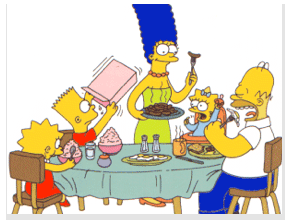
On November 1st, 1990 Fox aired an episode of the The Simpson’s depicting the family sitting down for a meal.  Before they ate, Homer asks Bart to give thanks.  Here is what Bart prays, “Dear God, we paid for all this stuff ourselves, so thanks for nothing.”  Undoubtedly, the producers of the show intended Bart’s prayer to be amusing.  However, I don’t think they knew they were touching on the dark side of prosperity.

After the Exodus from Egypt, God instructed the nation of Israel that He would be leading them to the land already prepared for their habitation.  It would be a land flowing with milk and honey; a land filled with vineyards and olive groves that others had planted. But God warned them that with prosperity would come the danger of forgetting God.  They would be tempted to look around at their wealth and take credit for what God had given them.  It happened.

The same mentality exists today. We relish unprecedented wealth and yet we fail to recognize that its source is God.  Why?  The short answer is sin.  We take our wealth for granted.  We feel we deserve it.  We imagine that we created it.  We are guilty of the very thing God warned the Israelites of.  We have developed an attitude of ingratitude.

Although prosperity is a blessing from God, it can have a chilling effect on our love for Him and on our gratitude for His blessings. What is the remedy? Should we give everything we own away and take a vow of poverty? That might work temporarily but it does nothing at the heart level.  Here are four observances I have been weaving into the fabric of my life as I have been converging on the fourth Thursday of November:  1)  Thankful people focus on what they have – not what they don’t have.  2)  Thankful people admit they have more than they deserve.  3)  Thankful people know that thankfulness needs to be developed.  And, 4)  Thankful people gauge blessings by things other than money.

It’s vitally important to be thankful – not just one day a year, but every day because it needs to be the pattern of our lives.  To borrow a seemingly trite question, what are you thankful for?

Uncommon Freedom

A desire for freedom…it’s what causes every eighteen year old, who checked out at age sixteen, to get their own palace after graduation.  A desire for freedom is at the core of independence.

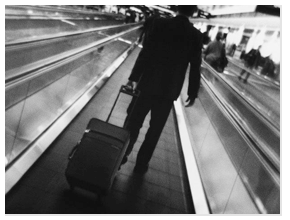
I was in and out of the Minneapolis/St. Paul airport this week.  On my way to Concourse “A”, and walking through Concourse “C”, I noticed a middle-aged woman performing ballet in the midsection of the concourse while passerby’s struggled to avoid her flailing arms and legs.  Three thoughts expeditiously came to mind as I scurried by on the moving walkway, 1)  boy, that lady’s crazy, 2) wow, she must really like ballet and/or is really bored, and/or really needs some exercise; she even performed a pirouette as I glided by chuckling, and 3) she must be secure in who she is and is discharging a level of freedom, that most, including myself, refuse.  Perhaps she’d found the symmetry of all three.  However, 50%, 25%, and 25%, respectively, isn’t really symmetry – it just means she’s crazy…

That whole scene got me thinking about freedom.  Let’s define the term from Webster’s Dictionary.  Freedom:  the state of being free or at liberty rather than in confinement or under restraint.  Since the debacle in the Garden every person, society, and culture has been pursuing freedom.  But, freedom from what?

Adam and Eve started a dual paradox by resisting God’s command that actually led to bondage (paradox one).  And now this inherited, sin inspired bondage can only be rectified by submission (paradox two).  In other words, because of sin we are only truly free in as much as we submit to God through a relationship with Jesus Christ.  The Bible says in John 8:36, “If the Son has set you free, you will be free indeed.”  That’s the essence of the Gospel and it’s authentic freedom…

NineteenFiftySeven

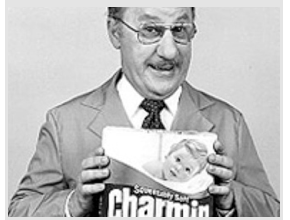
In 1957, Leave It To Beaver premiered on CBS portraying the ideal family to 171 million Americans glued to 47 million televisions in 39 million homes.  A few months later, American Bandstand, hosted by Dick Clark, goes national when it moved from Philadelphia to Los Angeles and Studio “B”.  Dwight D. Eisenhower was President.  The Pink Flamingo was created by Union Products worker, Don Featherstone.  The Gyrating rocker, Elvis Presley, emerges as one of the world’s first rock stars.  The most popular toys?  Slinkys, Hula Hoops and Frisbees. The children’s book, “Cat in the Hat” is written by Theodore Geisel as Dr. Suess and Mr. Whipple begins selling us Squeezably Soft Charmin.  Eveready markets the first AA alkaline batteries for use in portable transistor radios – cutting edge technology on both counts.

Prices were much different:  The average car sold for $2749 while the average production worker made $82.32 per week.  The cost of a first rate postage stamp was only 3 cents.  The average cost of a new house was $12,200 while the cost of renting a like home was $90 a month.  Gasoline was 24 cents a gallon.  Bacon was 60 cents a pound.  Eggs 28 cents a dozen.

A decade before my birth, 1957 was also the last year a child born in America was permitted to openly pray at the beginning of a school day in the nation’s public school system.  On June 25, l962, 39 million students were forbidden to do what they and their predecessors had been doing since the founding of our nation.  This has come at a tremendous price. The New York school children, which prompted the Engel vs. Vitale ruling, had simply prayed: “Almighty God, we acknowledge our dependence on Thee and beg Thy blessing over us, our parents, our teachers and our nation.”  America has experienced radical decline in each of the four areas of the children’s prayer: youth, family, education, national life.

In a subsequent ruling, Abington Township School District v. Schempp, the Supreme Court of the United States declared school-sponsored Bible reading in public schools in the United States to be unconstitutional on June 17, 1963.  This too, has been costly.

Today we face what seems to be a hopeless condition in America.  Gross immorality has engulfed the land.  Crime has taken over the streets.  Sexual promiscuity and perversion fills every corner of society.  Drunkenness and drug abuse is everywhere.  God has been rejected by most of our citizens.  How far the United States has drifted?

The only hope for turning this nation back to God is for those of us who claim the name of Christ to turn back to God.  God said in 2 Chronicles 7:14. “If my people which are called by My name will humble themselves and pray and seek My face and turn from their wicked ways, then I will hear from heaven, I will forgive their sin, and will heal their land.”  Let’s start praying, seeking and turning today…